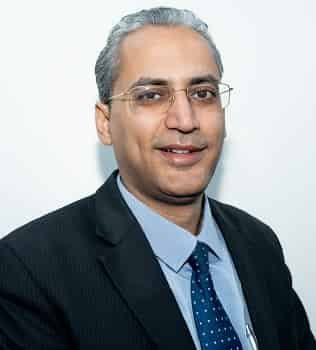
GUEST COLUMN / NITIN PURI
One of the most interesting aspects of building KisaanSay over the past two years has been the unique opportunity to meet farmers from across the length and breadth of rural India. Kiran Didi from Dholpur, in the Chambal region, was one of them. This experience introduced me to the realities of rural life and the aspirations of India's hardworking farmers. A key pain point that bothered me was that in the entire food supply chain, farmers are the biggest risk-takers. They brave the most adverse weather conditions, go through an arduous 100-120-day crop cycle twice a year, and face numerous adversities in accessing markets. But paradoxically, they receive less than 30% of the consumer spend. I repeatedly kept wondering as to what needs to be done to reverse this lopsided situation; after all, such a high-risk taker in the supply chain deserves a much higher share of the consumer pie! GDP numbers too point to this anomaly. Despite over 50% of the productive workforce continuing to live in villages across India, their contribution to the national GDP is below 20%. This situation certainly deserves to change, through a market-led business model, at scale.
After much deliberation, we at KisaanSay came up with a unique institutional innovation through our co-brand and co-profit partnership model with Farmer Enterprises across the country. We wanted to strengthen India's farming community through collective action and co-operation. By offering farmers a structured framework for professionally managing production, aggregation, marketing, and distribution, these Farmer Enterprises soon began to successfully address many of the structural challenges that have long constrained the farming economy. Through economies of scale, value addition, and the power of markets, farmers like Kiran Didi now get over 50% of the consumer pie, which is significantly higher than they used to.
The government has commendably created a robust institutional pipeline of Farmer Enterprises, including FPCs (Farmer Producer Companies), SHGs (Self Help Groups) & Cooperatives. Multiple government initiatives and departments, such as the Ministry of Agriculture and Farmers' Welfare, the National Rural Livelihoods Mission, the Ministry of Cooperation and NABARD have been very active in this endeavour. It is now time for the private sector to partner with these farmer-led institutions to build win-win collaboration models that enable Farmer Enterprises to add value and market their food products directly to consumers. A host of capacity-building and infrastructure-support initiatives have been undertaken through various government schemes across rural India over the last 10 years. We must monetize this soft and hard infrastructure to create a virtuous cycle of development. This could enable more Farmer Enterprises to follow this model of aggregation, value addition, packaging, and marketing their products to consumers through online and offline channels.
The Indian farmer, for long, has been trapped in a vicious cycle of low investible surplus, low value addition, and low income. It is now time for farmers like Kiran Didi to move into a virtuous cycle of development through collaboration and professionalisation.
India is blessed with a rich biodiversity, and this is an opportune moment to build supply chains that will directly connect farmers to consumers. This will ensure the best food products for consumers and the best livelihoods for farmers like Kiran Didi. This could indeed be a win-win for all!
(Nitin Puri is the Founder of KisaanSay)